From at least 2017 through 2021, the Walmart mobile app had functionality for making bill payments from your phone through CheckFreePay, much like their in-store money center bill pay option. With the right gyrations it was a great from-home liquidation channel, supported plenty of volume, and in some cases even served as a liquidation channel of last resort.
In Spring 2021 though, Walmart updated the user interface framework and the interface for its mobile apps, and in the process killed bill pay functionality. But, technical users could install an old version of the app and keep access to bill payments. Those payments continued to work for months, and even worked better than before, probably due to decreased transaction load and volume.
Why bring this up today? Is this a timely post? Two answers:
No, it’s not timely because there are always games to play with older apps
Yes, it’s timely because there are always games to play with older apps
This is your last weekend to figure out what to do with your Q1 American Express Business Platinum and Surpass Hilton credits. There are often local angles, but if you can’t find them or don’t want to deal with them, brunch at a corporate Hilton or Hilton Resort will almost always work in a pinch.
And let’s end today with a timely bit of weekend wisdom: In churning and manufactured spend the main goal is usually to take advantage of the spread between profit and loss, generally with very little risk, and turn that into a machine. Well, occasionally there’s a time where you know the spread is going to change for the worse at some point in the near future. When that happens, consider swinging for the fences taking to the extent that your risk tolerance allows.
Have a nice weekend friends!
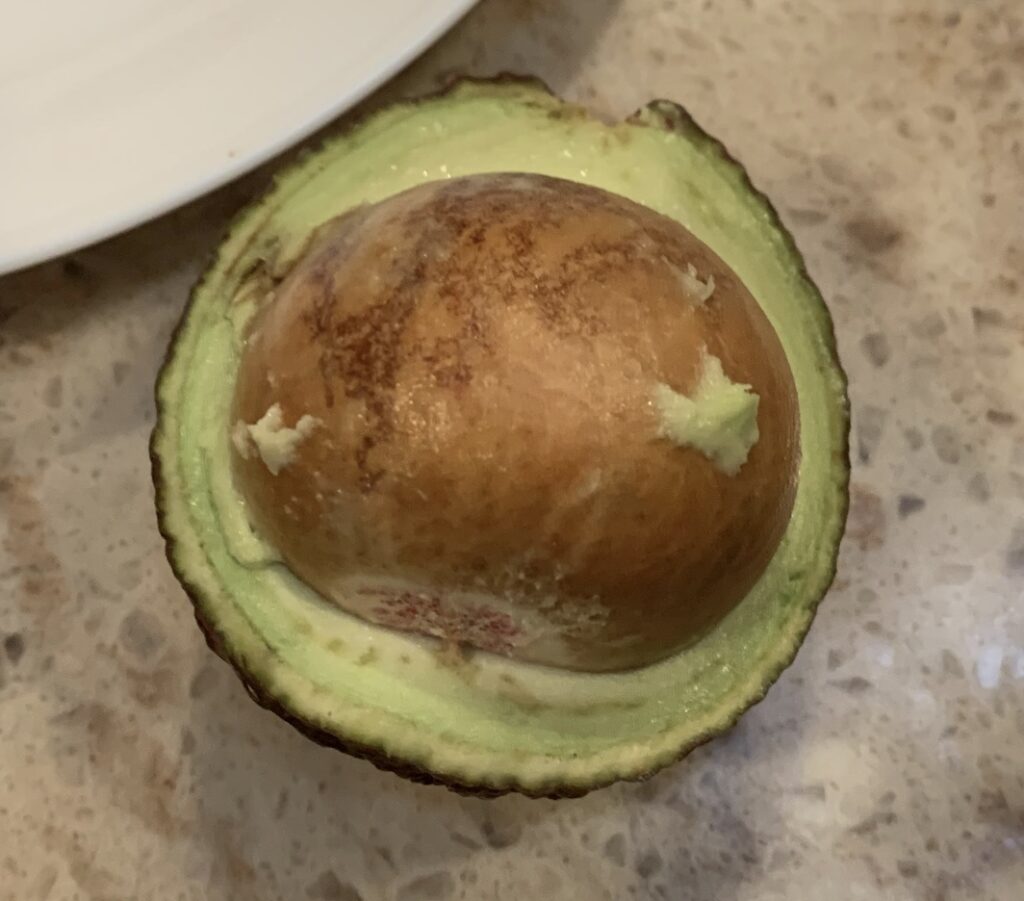
Hilton Garden Inn breakfasts can be paid with AmEx credits (delicious breakfast not pictured).
– Every card with an annual fee gets a bigger annual fee – The no-annual fee Gateway card doesn’t get XN inventory access unless you have $10,000 in annual spend – One time lounge access passes are no longer transferrable – You can now earn 1K status with nothing but spend on either of the ridiculously priced $695 personal and business Club cards – There are new credits on the annual fee cards, most of which are annoying, carved up throughout the year, and less valuable than they seem – Lounge access gets more restrictive without massive spend
Now’s a good time to book for other reasons too, like avoiding change fees on cheap tickets and paying bag fees, all of which will be implemented soon. Unfortunately double secret Rapid Rewards redemption values already quietly launched yesterday.
We haven’t played Breeze Dartboard Bingo™ for a while, but in honor of National Peach Cobbler today, we’ll take another round. [drumroll] Today’s draw is: Pensacola, FL to Norfolk, VA, PNS-ORF! If you hit Bingo, come see the MEAB front desk for your prize.
On most days since early 2024, the the Pepper platform offered bonus promotions on gift card purchases, and those bonuses crept up to the point of absurdity where Walmart, Delta, Home Depot, and other high value gift cards paid 30%. That all changed yesterday when a few things happened:
Tuesday morning bonus drops came hours later than normal
When they did come, payouts fell from 30x to 18-25x on the best bulk brands
In-app deal terms specified that even lower bonuses will be coming next week
They announced through multiple channels that lowered bonus payouts were permanent and that bonuses would be shrinking weekly until the business reached sustainability
Why did Pepper pivot? I think it’s been obvious since last year that these rates were unsustainable and that Pepper was losing money on every transaction (and oh yeah they just told us so), so a change was needed for the company to continue operating.
My most controversial blog post in terms of volume of discussion it produced was that based on how venture funding in big tech works, I guessed there was a 50/50 chance that Pepper would either run out of money or that they’d get new funding in March. I think the latter has probably happened and is exactly why we’re seeing all of these changes, and as a corollary I think that means that it’s probably as safe to use Pepper as most any other startup FinTech at this point. It’s also possible that it pivoted for an entirely unrelated reason, but I haven’t thought of another reason that lines up with the public and private data I have.
Regardless of why Pepper changed though, the fact that it did means that likely:
Bulk resale rates will creep back up as old, discounted inventory is sold
Floated coins in Pepper are probably safer than they were
People holding gift cards bought in the last couple of months can soon sell for big profits
Gift card resellers have a new post from a rando on the internet to debate repeatedly, and empirically, approximately 12 of those debaters won’t even bother to skim the article before debating
What’s my action, asked nobody? I hit Pepper coin-zero just last week after gradually drawing down my float, but I no longer feel like I need to be there. When resale rates return and deals are profitable, I’ll be playing the Pepper game like it was Summer 2024. I’m also buying some cards at the current bonus in anticipation of the bonus falling next week, and I expect I’ll be holding those cards for a while. Remember though, just because I’m doing something doesn’t mean you should do it too; in fact often it means you shouldn’t.
I’m allergic to booking airfare for my own travel with third parties as a general rule, but the American Express Business Platinum’s 35% Membership Rewards rebate for points bookings (~1.54 cents per point) on your selected airline, or on any first or business class seat, is valuable enough that I use their third party platform anyway. When you book via third party it’s rather hard, or sometimes impossible, to get an airline to help you when:
Schedules change
You need to make a non-trivial itinerary change
You want to pre-pay for services
You want to take advantage of travel waivers
You want to play games with frequent flyer numbers
But, it’s possible with many airlines to take advantage of American Express Travel’s rebate and to funnel that booking into a different ticket booked directly with the airline. Today, we’ll focus on how to do it with Alaska:
Book a non-basic economy Alaska flight with AmEx Travel
Wait 48 hours
Contact Alaska, and tell them you’d like to refund to flight credit
Wait 2-3 days for the flight credits to come via email
Apply the flight credits to your Alaska wallet
Book airfare directly with Alaska using your wallet
You’ll end up with the best of both worlds, a regular, first party booking but also a 35% Membership Rewards rebate. Of course, it’s possible that airfare prices change between steps 1 and 6, so factor that risk in as necessary.
Good luck!
Next time: An entirely different type of Alaska Airlines game.
Do this now:Make any Hyatt award bookings today that fit your schedule before the award chart is retooled tomorrow and lots of hotels go up in redemption cost. Most award bookings have great cancelation policies, so even speculative bookings probably make sense.
Turkish Airlines and Hilton have a promotion (registration required) for 1,000 bonus Turkish miles for stays through June 30, provided you set Turkish as your preferred travel partner in your Hilton profile. For new Hilton accounts, you earn 1,000 Turkish miles for each stay, but for existing Hilton accounts can you only earn the bonus once.
The best ongoing use case for this card used to be converting it to an AAdvantage Silver after a year, but because Citi will be the exclusive card issuer in 2026, that ship has probably sailed for new applicants. Instead, the best use beyond the sign-up bonus is probably to get a higher (or initial) credit line at Citi after the takeover.
Since it’s launch in 2021, I’ve thought the Chase United Quest Card was stupid, but it just keeps getting stupider and I’m convinced the product development team for the card lives in an alternate plane of existence. The annual fee has increased to $350, and there are new stupid credits to, uh, justify (?) the stupid increase:
– $5 monthly Instacart credit, plus $10 one time Instacart credit – $150 in credits at stupid Renowned Hotels and Resorts – $8 in monthly rideshare credits, except in December when it’s $12 – $150 in stupid JSX purchases – Small TravelBank credits for your first two rentals with Avis or Budget, but only using the United AWD which has generally inflated prices
This is probably a good change for exactly three cardholders on the planet, and bravo to you if you’re one of them.
An amusement park in the United Quest Card team’s alternate plane of existence.
The churning community has a number of wanna-be-but-not-quite-seedy underbellies, and since early this week all of them circulated a hacked Chase Sapphire Preferred 100,000 point sign-up bonus link repeatedly. The hacked link beats the current public offer and is therefore somewhat enticing, but the public offer will be the same as the hacked link starting Monday. Its imminent irrelevance didn’t stop the link from finding its way in the last couple of days out of the underbellies and into the mainstream community via forums, reddit, and several blogs though (I’ve purposely not linked to any of them).
Hacked and Modified Links
Churning has a storied history with hacked links, and most of that history is buried in lore and old discussion forums that are partially or totally obscured from the public eye and google’s crawlers. We can pick a couple examples for the sake of discussion that are well known though:
We could also pick dozens of cases in which hacked or modified links shared in churning circles paid the bonuses as expected, never lead to shutdowns, and generally worked really well for plenty of people.
On Safety
Strictly speaking, nearly all hacked or modified links don’t lead to a shutdown; you’re probably safe to use them when you encounter them as long as you can stomach the remote probability of a bank adverse action.
But, what makes the difference between a hacked or modified link that will get you the axe and any other hacked or modified link? My guess is that a critical mass of applications, bonuses, or specific marketing campaigns showing up on a bank’s KPI dashboard when it’s not expected is often the trigger. Again, leaning on the two cases from above:
In 2016, the 100,000 point Platinum card sign-up bonus was one of the most pervasive events in the churning community, largely because a six figure Membership Rewards sign-up bonus hadn’t been available to the public ever prior to the leak. Blogs talked about it, forums talked about it, meetups talked about it; it was like a Woodstock event in the churning community.
In 2020, The unlisted Ink links had been used successfully by a small group of churners for nearly a year. When the link became public via reddit and major blogs though, the number of applications and applicants exploded and the bank took notice. (In a note of irony, the small group of churners made the link public to try and hide themselves in a mass of applications.)
So, I’d wager that the safety of a hacked or modified link is inversely proportional to the number of applications approved using those links as a general guideline.
Finding Bad Links
How can you tell if a link has been modified or hacked? It can be hard, but there are a few telltale signs that often are good indicators:
For American Express: The landing page doesn’t have a login request and the application doesn’t have a “Next” button, everything is on one page
For Chase: You can’t find the same bonus or offer on any public landing page, via advertisement, or co-brand website
Also for Chase: APRs are listed as fixed and no mailers with the same offer have been seen
A blogger says something like “this is a hacked link”
What about other banks? So far, they haven’t cared in a meaningful way, so I guess it’s fine?
Good luck friends, and have a nice weekend!
* Black car seems to have originated from a bad translation from Chinese churning forums, but somehow is now part of our vernacular. (The correct translation was probably “unlisted”.)
– Sapphire Preferred: 100,000 Ultimate Rewards after $5,000 spend in three months – United Explorer: 80,000 MileagePlus after $3,000 spend in three months, increased $150 annual fee – United Business: 150,000 MileagePlus miles, increased $150 annual fee, increased coupon-book credits
Will the $95 Sapphire Preferred annual fee remain? It feels unlikely. Will the no annual fee ink card see an increased bonus of 90,000 Ultimate Rewards? It feels possible. What makes me say that? Chase’s tooling tends to work in groups. Do I understand that it’s annoying when someone writes repeated questions and then answers them? Yes. #sorrynotsorry
These points are worth 2-3 cents each for travel on Amtrak. If you’re lucky maybe they’ll combine a hard pull for this card with a hard pull for a JAL card, useful especially because FBNO doesn’t mind a lot of spend on its cards. (Thanks to kingmaine)
There’s no credit pull for the debit or reloadable flavors of the card.
Wyndham launched a new rewards debit card a few days ago that earns 0.5 points per dollar on general transactions, has a $6 monthly fee, a 2,500 point sign-up bonus with hurdles that make it not worth worrying about, and 7,500 bonus points annually. Wyndham points are worth more than Hilton or Marriott, but they’re still not usually worth much more than a penny each. I initially didn’t write about the card because this site’s goal isn’t to be an anthology of everything that happens in churning (there are other sites for that), and so I didn’t think it was worth my time or yours.
But a few days of percolating have changed my opinion. The card is issued by Sunrise bank which is usually happy to give anyone an account, and it has a different BIN than other debit card BINs that have been blocked at some banks, credit unions, and bill pay services. I’ll be getting one to toy around with, but just because I’m doing something doesn’t mean you should do it too.