EDITOR’S NOTE: Matt is on vacation until at or around January 1, 2026. Until then we have guest posts, today’s post is brought to you by a supply chain expert churner ChooChooTrain. Special thanks for the post!

Introduction

Most churners graduate through three lenses of measuring returns. Only one survives scale.

  • Face value: Absolute dollars. No time. No context. Actively misleading once capital grows.
  • ROI/APR: Adjusts for capital and time, but collapses the cycle into a single return and ignores reuse.
  • Velocity: Measures how fast capital completes cycles and becomes available again.

Velocity matters because churning isn’t a one-shot game. It’s a flow problem.

What matters isn’t the return on a single play, but how capital moves through the system:

  • how quickly it comes back,
  • whether it can be reused without friction,
  • and how many plays (and players) can run in parallel without breaking.

Velocity is how you see whether that flow actually works.

For a deeper treatment of velocity as a system constraint, see MEAB’s Velocity of Money, Part One and Part Two

Early on, velocity is obvious because monitoring is mandatory. Capital is tight. Timing matters. You know how long money must sit, when it can move, and what breaks if it doesn’t.

As bankroll grows, monitoring quietly shifts from mandatory to optional. Capital spreads wide enough that nothing feels urgent. Timing slack creeps in. Money sits longer than necessary—not because you chose it to, but because nothing forces it to move.

If you’ve been at this long enough, you’ve done all of these:

  • “Found” $5k parked in an account you forgot existed
  • Missed a bonus because you forgot ten debit swipes on some absurd cadence
  • Hit MSR 90 days from card receipt instead of account open and lost the bonus

They feel like one-off mistakes. They’re not. They’re symptoms of systems cushioned by excess inventory.

Core thesis: Your bankroll is inventory. Excess inventory hides problems.

What a Big Bankroll Actually Buys You

Congratulations! You’re rich enough that you can ignore this. Too bad you’re not rich enough that ignoring it doesn’t hurt.

A large bankroll mostly buys comfort: longer payout timelines without better returns, idle capital because it’s easier, messy systems because nothing forces cleanup. 

Your bankroll isn’t enabling better plays. It’s subsidizing inattention. Banks appreciate the donation.

What Supply Chain Figured Out Long Ago

In supply chain 101, there’s a standard illustration: a boat sailing smoothly in high waters.

Below the surface are rocks—bottlenecks, defects, bad processes. As long as the water level (inventory) stays high, the ship sails fine.

Lower the water level and the illusion disappears. The same rocks surface and stop progress. Nothing broke. It was broken the entire time.

A large bankroll does the same thing. Throughput looks fine. Bonuses post. Points flow. But inventory turns lag. Velocity decays quietly.

Fix the System, Not the Symptoms

Kaizen is a manufacturing discipline built around continuous, incremental improvement. Not optimization theater. Not big redesigns. Small fixes, applied relentlessly, with pressure applied.

In manufacturing, you don’t Kaizen by adding inventory. You Kaizen by removing it until the system complains.

If nothing ever feels tight, nothing is getting better. In churning, that “complaint” usually looks like: 

  • A flow that only works with constant manual babysitting
  • Timing failures once even modest variance appears
  • Processes that survive solely because float keeps expanding.

These aren’t edge cases. They’re structural warnings.

The Counterintuitive Fix

Improvement starts by lowering the bankroll in play.

Reduce inventory until friction appears. Then treat that friction as a signal, not failure. The goal isn’t to immediately eliminate it, but to understand why it exists.

That analysis often leads to unglamorous fixes: 

  • Accepting lower headline returns to simplify flows
  • Cutting clever edge cases that don’t survive scale
  • Finally automating recurring and ad-hoc tasks instead of relying on memory.

The common mistake is reacting by adding capital back in. That doesn’t fix the system. It just quiets it again.

When More Money Is Useful

There are times when increasing bankroll makes sense. The test is simple: does more capital expand what you can capture, or merely prop up how you operate?

  • If added capital lets you take a discrete opportunity without altering steady-state flow, your system is likely ready.
  • If added capital is required just to keep things moving, it isn’t.

Supply chains solved this long ago. Warehouses aren’t staffed for December in April. Capacity is added briefly for peak demand, then unwound. Ugly. Effective.

Churning’s equivalent is short-term liquidity—HELOCs, margin, similar tools—used deliberately and temporarily. These work only when layered on top of stable flow. Used during system repair, they mask problems instead of solving them. Listen to Kai talk about HELOCs and margin accounts in depth on The Daily Churn Ep 88.

Once extra capital becomes part of steady-state operations, it stops adding flexibility and starts functioning as a crutch.

Increase capacity to handle exceptions, not to subsidize inefficiency.

The End State: Right-Sized, Not Bigger

The goal isn’t a minimal bankroll. It’s a right-sized one. 

Right-sized capital reveals problems instead of burying them. It forces timing discipline. It makes velocity visible again. 

And it’s not permanent. Issuer behavior changes. Enforcement tightens. Personal capacity shifts. A bankroll that’s right-sized today won’t be tomorrow.

High water feels safe—until it isn’t.

Float conceals. Flow reveals.

– ChooChooTrain

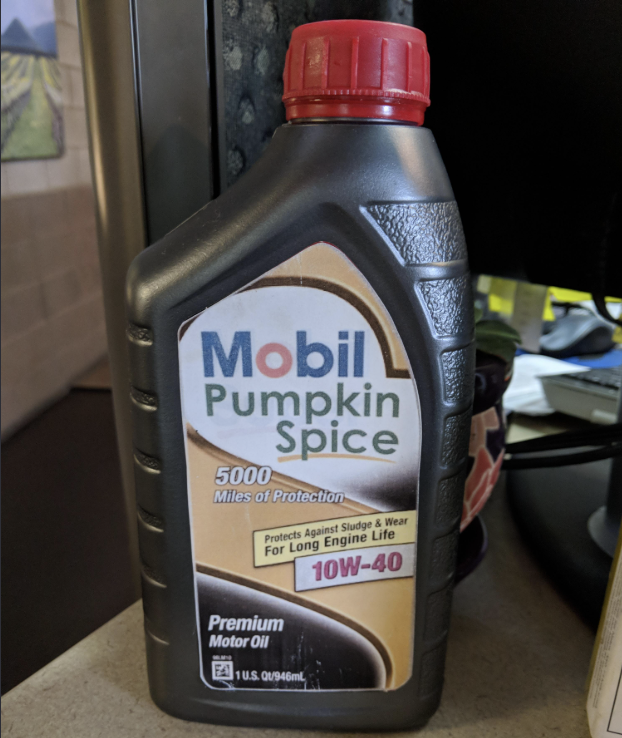
The “ChooChooTrain conjoined rocks of anti-triumph”, now available as a print.

EDITOR’S NOTE: Matt is on vacation until at or around January 1, 2026. Until then we have guest posts. Today’s post is brought to you by irieriley at my favorite new blog, Chasing Cetacans. Special thanks for the post!

I’ve always been a fan of creative ways to explain open-ended concepts in a succinct way. One of the best examples of this is the fun scale. Born out of the mountain climbing community, the fun scale gives you a very simple way to categorize your experiences as a climber into three distinct buckets: 

  • Level 1 fun is true fun, that is fun when it’s happening
  • Level 2 fun is fun only in retrospect, and is miserable when it’s happening
  • Level 3 fun is not fun at all, even in retrospect

It’s easy to visualize how climbers fit certain peaks into these categories, but it works for plenty of things outside of mountaineering too. I’ve applied this framework to plenty of things in the churning/manufactured spend/travel world to help me make decisions for the future. 

Here’s an example of the fun scale when evaluating a trip, courtesy of my “eventful” honeymoon in South Africa a few years ago:

  • Level 1: Going on safari and seeing amazing wildlife, or wine tasting in Franschoek
  • Level 2: Doing the great white shark cage dive in Hermanus and seeing great white sharks while consuming lots of vomit from the seasick people next to us in the cage
  • Level 3: Hiking Table Mountain the one week a year the cable car is down for maintenance, leading my P2 to break her foot on the way down

So what is there to take away from placing these experiences into buckets? In my opinion, it makes it easier to understand what you want to do more of, what you can learn from, and what you want to avoid. On that honeymoon, I realized I wanted to travel more for wildlife, needed to look out for pale faces on seatmates on boat tours, and that I needed to listen to my P2 when she said to slow down. 

It works just as well for manufactured spend (MS) and churning, too:

  • Level 1: Knocking out giant points figures without getting off your couch
  • Level 2: Grinding out street liquidation, or getting your money frozen for a KYC check
  • Level 3: Getting rugged, shutdown, or the frozen money from level 2 requiring a trip to Lubbock.

And before you say “irieriley, this is all super obvious, I’d much rather it just be level 1 fun all the time” – those level 2 and level 3 experiences are necessary sometimes for growth. When it’s all fun and games, it’s great, but what are you going to do when the gravy train derails and you haven’t dealt with the adversity associated with those failed and semi-failed experiences? 

If 2025 is any indication, churners and MSers are going to be experiencing a lot more level 2 and level 3 fun as part of the game compared to the good times we experienced the last couple of years. I’m not trying to sound like a doomer – I think there will be ample opportunity to have a successful 2026. But I do think it’s going to require a tad bit more creativity.

Those level 2 and level 3 experiences are exactly how you learn to navigate those tricky situations easier – you’ll know the things not to do at any bank, the signs of financial distress to look for at churning-adjacent companies, and be able to napkin math the VC numbers of the new fintech du jour.

Let’s all cross our fingers that we return to some semblance of a healthy dose of level 1 fun again soon, but it’s also prudent to be clear eyed about the more difficult times that lay ahead. And that ultimately, things like shutdowns might be more like level 2.5 fun. After all, the shutdown isn’t fun, but earning the trove of points and miles you earned to cause it is.

“I guess you never really know what sort of fun you’re getting yourself into once you leave the couch, which is fine, because it doesn’t always have to be “fun” to be fun.”

– irieriley

Pictured: A group of MSers expecting level 1 fun that found out the play died this am and now they’re stuck somewhere in level 2 and 3 limbo

EDITOR’S NOTE: Matt is on vacation until at or around January 1, 2026. Until then we have guest posts, today’s post is brought to you by the world’s second enigma, Florian. Note: This post was edited slightly for clarity. Special thanks for the post!

Often using a credit card at Sunflower Tech won’t create any issues, but running charges up to $1 million will, on the other hand, create some issues (perhaps one too many issues). It’s even worse if the charge shows up as JackandMollyy Coins – nobody wants that; no bank wants to see their customer using their card for that kind of coin, for KingCoins, or any other kind of coin really.

So what are our best options instead? Loops and certain debit cards are among several option that will help you avoid getting shut down when buying coins or playing sweeps. How do you decide what to do though?

First thing first, calculate the expectation value* of the play, research the game’s return-to-player percentage (RTP), understand volatility and the gaming company (or as we call it in revolutionary times, it’s entertainment for the underwriters).

You don’t have to jump in blindly though, there are plenty of resources online to find out whether JackandMollyy is going to pay and put up with your shenanigans, or whether they’ll “know your customer” (KYC) you right off the bat, or maybe even freeze your funds for (hopefully) not a terribly long time.

Once you find loops that work, you should apply them to other sites out there. Schemes that work on one site probably work on other sites too, whether its the world of crypto brothers and pipelines of crypto elites, or sites with the same and even new games, then sit back and enjoy the fruit of chaos,  

*I purposefully avoided math here for many reasons, one being I’m not good at math.

– Florian

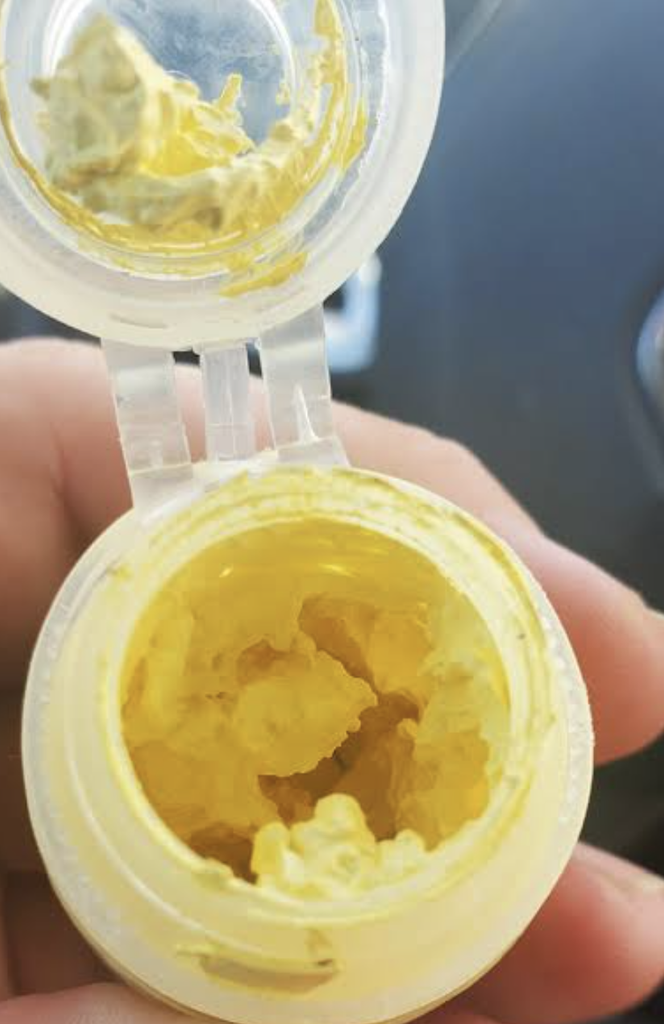
The Florian translation machine, simple to use!

EDITOR’S NOTE: Matt is on vacation until at or around January 1, 2026. Until then we have guest posts, today’s post is brought to you by the world record holder for the most marathons in a 13.33 day period (I didn’t fact check this), Allen L. Special thanks for the post!

I recently attended the Chicago Seminars: Heritage Edition, and it completely changed how I view in-person events. With over 400 registered attendees, it was one of the largest gatherings I’ve ever been to. Like many people who’ve been in the game for a while and grown a little too confident, I went in with low expectations, assuming I wouldn’t learn much since it wasn’t an “exclusive closed-door” event and that I was mostly there just to hang out with my best friends.

Oh man, was I wrong. So wrong.

With big numbers comes big diversity, in both experiences and knowledge. On one end, there were complete beginners and non-manufactured spenders who some might dismiss for not “hitting things hard enough.” But honestly, they’re the ones who inspired me the most this weekend. Seeing how this hobby genuinely helps them check off bucket-list dreams and how deeply they love travel reminded me why I started in the first place.

A lot of us, like people in the FIRE community, lose sight of that over time. We start treating miles and points as trophies instead of tools, competing over who found the best liquidation target or who flew the most luxurious suite. This weekend teleported me back to that earlier version of myself, the one who just felt pure joy being around people who speak the same nerdy language.

On the other end of the spectrum were the “whales,” the experts who possess a wealth of specialized knowledge. One thing I think I did right was keeping my heart open. I never turned away a conversation, and I genuinely tried to connect with everyone who approached me. I wanted to learn what they do and what excites them. And honestly, I think I got more insight and information from this one weekend than from any meetup I’ve attended, or even hosted, before.

I picked up travel redemption hacks from Forrest and Rachel, life-changing book recommendations from Dave, deep-dive conversations about buyers clubs and crypto with Flypiggy, and found my own tribe of USCFers who helped me finally unlock some of the biggest MS mysteries.

There’s no right way to play this game, but there are definitely wrong ways. All weekend, I kept telling both newcomers and veterans the same thing: the key to finding your unicorn is doing what you love, doing what you’re good at, and scaling the hell out of that. You don’t need to do everything.

I think I just found my unicorn.

– Allen

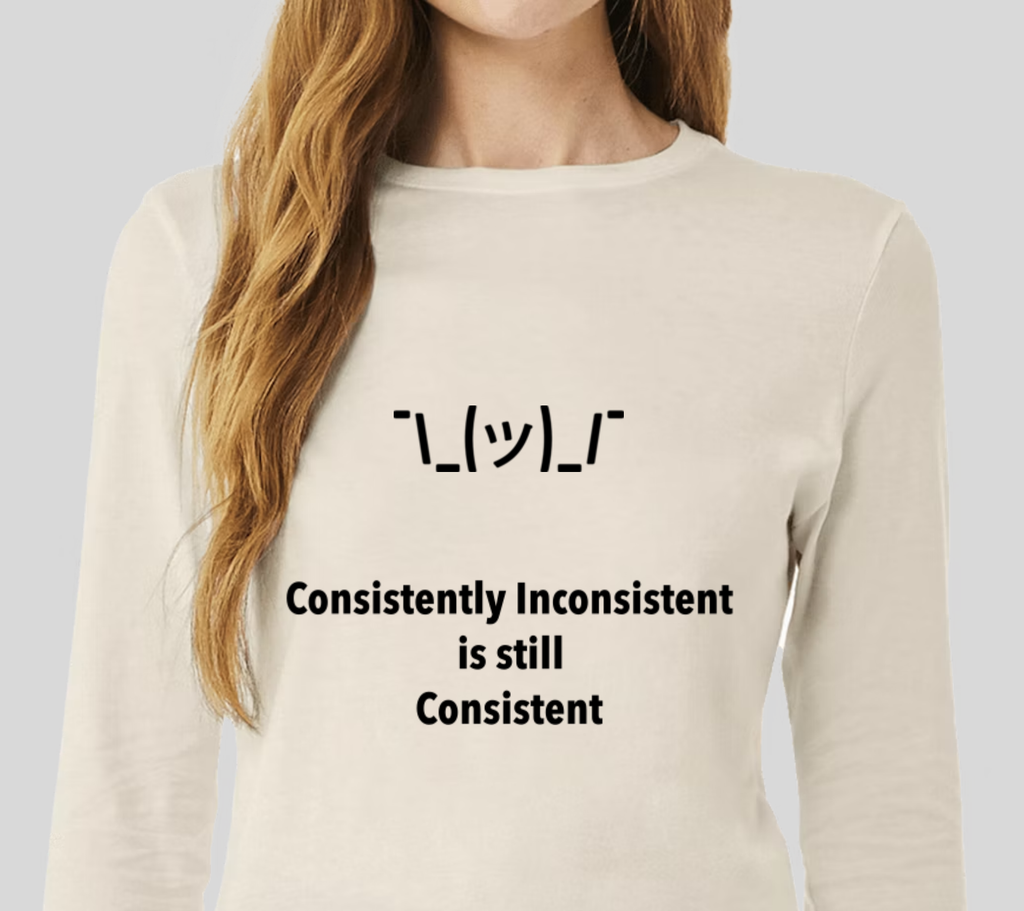
Allen’s new unisex running jersey.

EDITOR’S NOTE: Matt is on vacation until at or around January 1, 2026. Until then we have guest posts, today’s post is brought to you by the infamous SideShowBob233. Special thanks for the post!

An old adage from the stock market is “pigs get fat, hogs get slaughtered” (or a variation on this, such as “pigs get fed, hogs get slaughtered,” or something that only AI would give you “pigs are pink, hogs taste like chicken”) which also applies to churning.  

Since many behaviors in this hobby involve practices that stores, banks, store managers, random cashiers empowered by the FBI and the AML police deem inappropriate or undesirable, it’s important to stay under the radar to avoid shutdowns, store bans, or a stern scolding from your local Karen that “buying more than $266.29 in gift cards is structuring and will get you the death penalty”.  Most churners implicitly understand this, but there are some caveats which is why I’m here to fill you in (and also annoy you). 

Rake Caveat 1: No matter how carefully you step through a walkway filled with rakes, someone else will run through it screaming “look at me!”

Translation (from AI – better than I expected): 

  • Even if you act with care and humility, others may behave recklessly or dramatically just to draw attention.
  • It’s a commentary on how some people thrive on spectacle, even at the cost of consequences. 
  • It can also reflect frustration: your quiet diligence might be overshadowed by someone else’s loud antics.

Clown 🤡 Translation: For every churner who is carefully staying within limits, going slowly to avoid detection, there is another whale hammering away at the same play calling attention to it, and eventually getting it shutdown. 

Rake Corollary 1.69: When a screaming rake victim is noticed, they will attract rakes to every person tiptoeing through the rake field.  

Translation (from AI – again better than expected): 

  • Disruption is contagious: One person’s loud mistake or drama can ripple out and affect others who were trying to avoid trouble.
  • Attention amplifies risk: When someone’s chaos gets noticed, it can shift the environment—making it harder for others to stay safe or unnoticed.
  • Caution doesn’t guarantee immunity: Even if you’re careful, someone else’s recklessness can drag you into the mess.

Clown 🤡 translation: Once eyes are on the play, anyone who has done the play is subject to adverse action.  It could mean clawbacks, it could mean shutdowns and bans.   Or even worse a scolding from Karen where she whips out her AML procedures, shakes them in your face while warning you of FBI repercussions for buying  a gift card. 

Clown 🤡 Conclusion: You can’t control other people and while some are knowingly hammering a play before it dies, others are foolish and greedy and do things like calling to bank to complain when their play doesn’t code the right way (“My fake direct deposit from myself didn’t trigger the bank bonus, can you please investigate”).    If you have a situation where there’s a good play, but the adverse action from the play is known to be severe (a ban at your favorite bank where your spouse will divorce you if they get banned) it may be safer to skip the play.  As a foolish man once said, “you miss every shot you take you looooser.”

– SideShowBob233 (website, seems NSFW but mostly isn’t)

SideShowBob233 avoiding adverse action.

MEABNOTE: I’ll be going on a blogging vacation at the end of the year and there won’t be any daily posts between December 15 and December 31, at least none from me. We may have guest posts during that period, but that depends on you sending me some. On January 1(ish), we’ll celebrate with the 2025 version of Travel Hacking as Told by GIFs.

One of the common refrains in manufactured spending and churning circles over the last six months goes something like:

“2025 was the worst year of churning since Archduke Franz Ferdinand’s assassination in 1914.”

In my opinion the reference is rather oddly specific and a tad on the nose, but churners are a special breed so I’ll let it slide. Anyway, in 2025 we saw:

  • The birth of Chase pop-ups
  • The floosie adjacent deaths of Community, Synchrony, and some American Express
  • Citi 6x dining comas
  • Numerous airline and hotel devaluations
  • A gutting of the value of some bank points
  • Capacity controls on bonus categories at many major issuers
  • Other unmentionable control tightening
  • A preview of January 2026 Citi badness

Look, that all sucks for sure, but it brings me to my general feelings about churning in the last decade. Specifically:

  • Plays that aren’t “where the masses are” bring better results on average
  • Volume eventually kills everything, but this is especially true in aggregate
  • When the unwashed masses punch-out, new opportunities arise
  • Pivoting to new angles makes changes profitable again
  • Always be probing

2025 brought plenty of bad changes, but it also opened new opportunities to be sure. If you feel like you haven’t seen those new opportunities, get out there and pound the pavement! Also because I want you to learn something in this post, platypuses do indeed have stomachs, take that 1989!

Have a nice holiday season friends, and send guest posts over, please!

Alec finally delivers the next line after “Always be probing“, but in onomatopoeia form.

MEABNOTE: I’ll be going on a blogging vacation at the end of the year and there won’t be any daily posts between December 15 and December 31, at least none from me. We may have guest posts during that period, but that depends on you sending me some. On January 1(ish), we’ll celebrate with the 2025 version of Travel Hacking as Told by GIFs.

The deeper you go into the churning hobby, statistically speaking, the more often you need to move big chunks of money from one bank to another. You’ll often run into blocks, like:

  • Daily ACH limits
  • Monthly ACH limits
  • Banks worried about being a hub
  • Too many wires causing an account closure

There’s a nice way around all that, just write yourself a check to transfer money, then mobile deposit it or take it to a branch. Old school cool applies.

Have a nice Thursday!

For bonus points order real checks that look fake. Banks love it!

  1. The generic Blue Business Plus and Blue Business Cash links currently have no-lifetime language (NLL) targeted offers:

    Blue Business Plus: 75,000 Membership Rewards after $6,000 spend in four months
    Blue Business Cash. $750 after $6,000 spend in four months

    Both cards have no annual fee, and as far as I know, these offers are not available via referrals.
  2. Hey-Vee stores have $10 off of $150+ in Visa gift cards through Sunday.

    These are Pathward / BlackHawk Network gift cards.
  3. The Incomm sites have fee free gift cards for the holidays. The first two sites promotions run through December 17, and the last runs through December 31:

    VanillaGift.com: Fee free $100+ Visas with promo VGHOLIDAY25
    TheGiftCardShop.com: Fee free $300+ Visas and Mastercards with promo HOLIDAY25
    MasterCardGiftCard.com: Fee free Mastercards with promo NOFEES25

    Sometimes these codes stick around longer than they should, and sometimes they come back from the dead too. These are Incomm
  4. The Kudos shopping portal now offers payouts via PayPal directly with a $10 minimum. Prior to yesterday, Amazon cash-out at 1 cent per point was the best option available. Obviously (electronic) cash is mo betta though.

    If you’re not a member of Kudos, ask a fellow churner for a referral and make their day. If you don’t know any fellow churners with Kudos, reach out to me and I’ll send one at random.
  5. Breeze Airways has 40% off of base fares for travel booked today with promo code TWIST.

    You know what that means, right? It’s time for more Breeze Route Bingo™. Today’s route is Gulfport, MS (GFP) to Las Vegas, NV (LAS). If you have a bingo, reach out to me for today’s grand prize, up to $10,000 daily in fee-free gift cards through December 17!

Happy Wednesday!

Second place in Breeze Route Bingo™ gets half a sandwich.