EDITORS NOTE: In 2024, I’ve introduced Guest Post Saturdays. I’m still looking for more guest posts, please reach out if you have something interesting to share with the community! Today’s guest post is from Southwest Airlines kingpin and family travel guru, Brian M!

Garden The Flexible Options (GTFO) and travel better! Employing gardening strategies for multiple travel options reserved with flexible change and cancellation terms mitigates the risks of uncertainty and dampens the negative impacts of uncontrollable factors that affect travel.  Moreover, one’s travel plans become more adaptable.  For those about to travel, we salute you!

The concept of gardening a reservation is not new. In the travel maximization context, “Gardening” is the practice of booking and monitoring a travel reservation while consistently analyzing whether the booked reservation (which may have been impacted by some outside factor like a schedule change) may be efficiently improved through some sort of action(s) or change(s) and the activity of undertaking that action or change to improve the subject reservation.   When factors affect a reservation that one is monitoring, then one may be able to (or may have to) undertake some action that could lead to an improved reservation. Always be probing the alternatives of a reservation to determine whether inaction, a change, or a cancellation may be the best decision. Deals can vary at original booking and over time; so, using and revisiting different levels of one’s travel waterfall of techniques is essential.  

Flexible reservations are also not new; but, flexibility does have value. Most car rentals have long had very flexible cancellation terms.  And, many hotel reservations have had flexible change and cancellation terms.  More recently, flight reservations issued by more carriers, especially through their award loyalty programs, have become more flexible.  Importantly, flexibility may be free!  Okay, that’s not quite true because even if there is no monetary cost to a change or cancellation, one would still need to undertake the effort to book, change, or cancel a reservation (so, there is an expenditure of time and effort) and there’s an opportunity cost of those points or miles.  Regardless, booking flexible rates/fares can preserve the ability to be ready for uncertainty, including both known unknowns and unknown unknowns. Fares and rates may drop. Flight times may change. New, more preferred, flights may become available. Accommodation amenities may close. Natural disasters may impact a destination. A car type may no longer be available or suitable. A travel companion may become ill or simply decide to no longer travel. To be impacted by an external force is human; to prepare for uncertainty is divine.  Changes will happen and the adept can adapt by gardening existing flexible reservations. When the reservation gets tough, the tough garden the flexible reservation!

Options in travel, like in life, are important. Reserving multiple flexible options for aspects of travel or flexible options for entire trips enables one to gain more value and empowers one with more control to exercise the desired option (and cancel the undesired flexible option(s)) when it becomes time to strike. Furthermore, gardening those options amplifies the value and control unlocked by flexible change and cancellation terms. Could one sow one’s travel field with inexpensive option seeds with the intent that some schedule change or weather lemons may grow to produce a bushel of opportunities and enjoy some refreshing non-stop lemonade? However, to reserve multiple flexible options with award program currencies, one must earn those currencies first. Miles need to be earned before they can be burned.  So, earning a sufficient volume of miles and points can be helpful to book early and book often. But, what volume may be sufficient varies and could be lower than may initially seem to be required given the ability to reduce, reuse, and recycle miles and points over time as options are canceled and changed. Miles burned for a reservation may rise like a phoenix from the ashes of cancellation ready to fly into action for the next reservation. Consideration about how to option the travel is also important – which traveler(s)? which flight(s)? which accommodation(s)? which date(s)/night(s)? which elite benefit(s)? which booking method? Considerations are unique for each aspect of each trip for each traveler. 

And, putting these three concepts together creates a travel strategy greater than the sum of its parts empowering one to travel better. A trip that may have been originally booked with a 2-stop flight itinerary on a less preferred day to a counter pick up for an expensive compact rental car to drive to the Hyatt Place Lubbock may be gardened to become become a better option – a non-stop flight to stroll directly to the rental car aisle to choose any inexpensive full-size car to drive to the Hyatt Regency Wichita after freely canceling non-preferred flexible alternatives. However, time, effort, and organization are mandatory to the success of any GTFO travel strategy.  So, determining how deep to dive into each aspect can be critical to maintaining sanity and avoiding The Optimizer’s Curse. Therefore, too many specifics related to a GTFO travel strategy would be imprudent. One must decide for oneself whether to, when to, and how much to utilize such a travel strategy. Of course, there are risks associated with the strategy beyond loss of sanity, including that duplicate reservations may be automatically canceled by the travel provider. Furthermore, speculation is undesirable: one must decide for oneself where to draw one’s own line – how far is too far and what may create too much risk given potential adverse consequences.

Travel is about the journey and the destination. So, utilize a GTFO travel strategy to burn some miles to GET THE F* OUT – both to travel better than one otherwise might and to spend less! Or, don’t travel – cash-out miles and improve life in a different way! No matter what, miles earned are only worth the value gained when burned. 

“Better to be prepared for an opportunity and not have one, than to have an opportunity and not be prepared.” Travel opportunity is knocking and you may have the option to seize it today while maintaining the flexibility to seize a different opportunity tomorrow by gardening each of those seized opportunities until one becomes the best option.

– Brian M

Preparing to garden a few existing bookings.

EDITORS NOTE: In 2024, I’ve introduced Guest Post Saturdays. I’m still looking for more guest posts, please reach out if you have something interesting to share with the community! Today’s guest post is from a strong community contributor, and the official churning historian, Hank.

Confucius’s churning manual says that if you want to know the future then study the past. With that in mind it’s time to get out the popcorn and enjoy some unicorns from 10+ years ago.

  • Funding Citi checking accounts for $100k/pop on 4% everywhere cash back card.  No elaborate shenanigans.  Build a $100k CL on the Barclays Travelocity MasterCard (MEAB Unsung Hero card 2009 – 2015), fund account, repeat.
  • Venmo no fee $3k/month unlimited accounts. For it’s first several years Venmo allowed up to $3k/month of fee free credit spend per account. An account was an email address, a phone number (google voice), and a unique credit card (employee card).
  • 20+ BOA cards in one sitting. While nowadays BOA has credit line rules in place to throttle velocity historically a good “App-o-Rama” could net 20 cards in a sitting. The downside: highest cashback bonus was $200. Upside: easy to combine credit lines for other shenanigans.
  • Buy GC sell same platform 3% profit. Gift card reselling websites didn’t used to have strong guardrails. You could buy (for example) Target gift cards, stack rebates, and sell the same gc back for a profit. Repeat, scale.
  • Gold bullion by the pound. While the better known play was dollar coins from the US mint the back saving move was gold coins on Ebay. By stacking a series of rebates you could earn 2-5% spread + points. Limits were float (things haven’t changed) and your comfort levels with constantly driving 6 figures of bullion to the post office in a beat up old ford.

While the specific plays above are long gone there are variations of each circling around to this day. EDITOR’S NOTE: Always be probing

– Hank

Scrooge McDuck explaining to a police officer why thousands of dollars of dollar coins are spilling out of his trunk after a traffic accident.

EDITORS NOTE: In 2024, I’ve introduced Guest Post Saturdays. Today’s guest post is from a new travel blogger but seasoned financial hacker, Graham, who offers great insight on application of churning techniques to other aspects of finance.

tl;dr:

  • The tricks you know from churning can be applied elsewhere in life, such as when you change jobs:
    • You can double dip on 401k matches and mega backdoor contributions
    • You can hold out for the best offer on a once-in-a-lifetime operation like rolling an old 401k to IRA
    • You can drain corporate benefits, like you’d drain an Amex coupon book before closing the card
    • You can get your annual fees (aka taxes) refunded if you get money clawed back by your employer
    • Just like you book refundable bookings as backups, you can rely on COBRA as a refundable (never charged, really) backup insurance option

Intro

In the world of churning and travel hacking, we’re used to using all sorts of tricks to get the most value for ourselves. We double or triple dip on annual benefits, we hold out for the best offers on NLL cards, we drain the coupon book benefits on a card before closing it, we take advantage of grace periods for getting annual fees refunded, and we make preventative refundable travel bookings. It turns out that the kinds of tricks we use for credit cards and travel also apply to many other aspects of life. In this post, I go through all the ways I’ve found to apply churning tricks to the process of changing jobs.

It should go without saying, but I’m just some random dude on the internet that isn’t a lawyer or accountant (and more importantly isn’t your lawyer or accountant). I’ve done my best to research and cite these tricks, and to include my own experience where I have it, but make sure to do your own research and understand the consequences of what you’re doing before blindly applying tips in this post.

401ks

Double Dipping: Two 401k Matches

Many employers offer to match the money you contribute to your 401k each year. Those matches apply to an overall per-employer limit ($69,000 for 2024) not your personal limit ($23,000 for 2024). Having two employers gives you the opportunity to get two full matches. Let’s imagine this scenario:

  • Employer 1 offers a 50% match on contributions (up to some fraction of your salary), and you’ve earned enough for up to a $7.5k match on 15k contributions
  • Employer 2 offers a 50% match on contributions (up to some fraction of your salary), and you will earn enough for up to a $5k match on 10k contributions

There are multiple ways to optimize this scenario:

  • Easier, Less Profitable Way – Limiting Contributions at Employer 1: You could limit your contributions to Employer 1’s plan to $15k, so you maximize the match without going over. Then when you join Employer 2, you can use your remaining space to contribute $8k, getting $4k of your possible $5k match. This leaves some money on the table, but nets you more than if you’d just maxed your 401k at one or the other employer.
  • Riskier, More Profitable Way – Excess Deferral + Corrective Distributions: You could contribute $15k to Employer 1’s plan and $10k to Employer 2’s plan. This would put you in a situation where you’ve achieved the maximum match, however, it also puts you $2k over your $23k personal limit and means you’ve made an Excess Deferral. The consequences of an Excess Deferral are double taxation on that money, and potentially additional penalties, which probably outweigh the value of the additional match. You can avoid the double taxation and penalties with a Corrective Distribution that removes $2k from Employer 1’s plan. The catch is that Employer 1’s plan may not be willing to provide Corrective Distributions, or Employer 1 may attempt to claw back the match. Before attempting this method, you should confirm your plan supports Corrective Distributions and you should be prepared to really pay attention when filing your taxes.

Note that there are plenty of other nuances of 401k plans that might affect your personal results, such as true ups and vesting schedules. Make sure you know both plans inside and out and have thought it through before attempting.

Double Dipping: Two Mega Backdoor Contributions

The mega backdoor roth is the lesser-known big brother of the backdoor roth, and it lets you sock away tens of thousands of dollars through your employer’s 401k plan. An even lesser known thing is that because mega backdoor contributions are not Elective Deferrals, they’re only subject to the overall per-employer limit ($69,000 for 2024), not your personal contribution limit. That means if you change employers through the year –and both plans support it– you can do the mega backdoor roth twice.

Holding Out for the Best Offer: Saving a 401k to Transfer

When leaving a company, you often have three choices for what to do with your 401k:

  1. Keep it with the current plan administrator (beware: there may be fees)
  2. Roll it into an IRA
  3. Roll it into your new 401k plan

There are many pros and cons to each that are beyond the scope of this post (eg. IRAs have fewer bankruptcy protections than 401ks), but here are two reasons you might want to hold off on rolling your old 401k into your new plan:

  • You can sometimes roll a 401k into an IRA to get relationship pricing at banks. For example, I used an old 401k to get to the next relationship pricing tier on my mortgage, saving an additional 1/8% on my mortgage rate. Note that including retirements in relationship pricing is not the norm, and Citi is one of a few banks I found that did that.
  • You can sometimes find significant bonuses to bring an IRA to brokerages. For example, Robinhood has a 3% match right now (beware they require you to keep the money there for 5 years)

One thing to be aware of if you plan to use one of these tricks is the pro rata rule. If you do backdoor roth IRA contributions, the rule can create negative tax consequences if you leave your pre-tax money in an IRA through the end of the year. My personal workaround was to roll my old 401k into an IRA to get the Citi relationship pricing, and then roll the IRA into my new 401k a month later (all within the same year).

Draining Benefits: Using up Annual Benefits

Many companies have miscellaneous benefits that reset to full at the beginning of the year, and have a use-it-or-lose-it model. Examples include commuter cards and FSAs. Many benefits will cease to be available once you leave, and others will have a limited window to submit expenses after you leave. Make sure to keep track of the deadlines for these accounts, and drain them.

Note that some benefits like FSAs are based on paycheck deductions that happen throughout the year, but the full amount may be available in your account starting on Jan 1. I don’t believe there are laws governing this, but on departure my company doesn’t claw back FSA spend that exceeded paycheck contributions. If this is the case at your company an you know you’re leaving far enough in advance during open enrollment period, you could max out your FSA contributions to take advantage of this edge case.

Fee Refunds: Tax Refunds on Clawbacks

If you get any money clawed back when changing jobs (eg. a signing bonus that didn’t fully vest), keep track of it. If you previously paid income taxes on that money, you may be able to deduct the clawback from your income. I personally was able to deduct a $14,000 clawback for the 2019 tax year and had my return accepted with no audit, but this may be a scenario where you want an accountant for CYA purposes.

Backup Bookings: COBRA for Health Insurance

Insurance from your old job usually lasts to the end of the month that you left. If you don’t start your new job by then, COBRA is a program that lets you pay to continue your old coverage. You have 60 days from when your coverage ends to request that continuation of coverage under COBRA, and the coverage “is always retroactive to the day after your employer coverage ends”. You pay the full cost if you do elect, but if you have a short gap in insurance, you can hold off on electing for COBRA until you know if you happen to need it or not. If it turns out you did need it, elect after the fact and be covered. If it turns out you didn’t need it, you’ve saved on the cost of insurance.

About the Author

I love understanding systems, and optimizing for the best outcomes within the rules as implemented (rather than as written, which is a distinction all churners should be keenly aware of). This love has led me to a career in cyber security, to churning, and also to a general obsession with optimizing all things finances. I’ve recently turned that last point into a blog where I write posts like this one (with many more in the pipeline). If you’re interested in that kind of content, there’s a subscribe box at the bottom of the blog. And if you think I’ve missed something, gotten something wrong, or should write future posts on a particular topic, please drop me a line.

– Graham

Graham’s light evening reading, prolly.

EDITORS NOTE: In 2024, I’ve introduced Guest Post Saturdays. Today’s guest post is from the witty, inspiring, and definitely-not-a-giga-chad irieriley.

If you’re like me, you likely didn’t set out in this hobby thinking you’d end up where you did. I was a backpacker when I started back in 2016, dreaming of free economy flights and upgrading from hostels to Hyatt Houses.

I did not think it would lead to hours spent probing fintechs, the rise and fall of the world’s greatest bodybuilding supplement company, and using developer tools to identify offer codes and account masking patterns.

Of course, there’s a lot of steps and shifts in perspective between seeing a TPG ad on TSA bins at LaGuardia and not giving a second thought to 99x Amex AU offers.

MEAB‘s wisdom posts contain a lot of thought provoking questions, but my all time favorite post is this one – concerning perception of dollar value, scaling your spending, and how things change as you go deeper down the rabbit hole. 

To build on Matt’s original premise, I’d posit that the same perception shift occurs with redemption. For the sake of discussion, let’s look at the value of 150k Amex MRs – a sign-up bonus that anyone with a pulse can earn with a personal Platinum card.

  • Non redeemer: What are transferable points? I’m just a giga-Chad cashing out my points for Home Depot gift cards.
  • Beginning redeemer: Wow, $6k of spend in 3 months is a lot. But 150k points transferred to Delta Skymiles must be enough to get to the moon  roundtrip to Europe in business class apparently, a one way basic economy award to Lubbock.
  • Intermediate redeemer: Look at those fools wasting their points on gift cards and transfers to domestic carriers – I got 30cpp by transferring to ANA and booking last minute one way J flights to Japan. 
  • Advanced redeemer: Things have come full circle – I have so many points that I will never be able to redeem them all for travel. I’ll book my travel a year out, and I’ll cash out the rest. 150k MRs = $1,650 with a Schwab Plat or ~$1,950 depending on my bargaining skills.

Pictured: A local business owner/giga-Chad on his way to Home Depot to convert the spoils of $7m of Amex spending into a patio furniture set.

Depending on your situation, each viewpoint can make sense. However, I’d imagine most MEAB readers fall into the final segment. 

And in a community that is largely a perfectly aligned Venn diagram with other optimizer communities like FIRE, cash is king, especially when you hit the inflection point where your ability to earn wildly outpaces your ability to burn. 

I was talking to my P2 (and fellow Waldorf Pedregal enthusiast) about how poorly I had strategized earning and redeeming early on, and she provided some much needed perspective on the whole thing when actually looking back at those first redemptions.

Some of our first cards and subsequent redemptions:

  • Citi AA Platinum pre-derAAilment – SUB used to fly AA Y to Europe, where we attended music festivals and yacht cruised as backpackers
  • Chase Southwest chasing Companion Pass – used to book Y flights to the Caribbean, where we got engaged
  • Capital One Venture – I hit the SUB on the engagement ring, and used the cashback to erase the insane VS surcharges on our first J redemption for our honeymoon

Pictured: Mr. and Mrs. irieriley in 2017 enjoying the spoils of their very first award redemption

While the strategy was akin to SideShowBob233 stepping on a rake over and over again, those first few forays into earning and burning provided more to enrich P2 and I’s lives than another $2,000 into VTI ever will. 

I think it’s ok to occasionally zoom out of doing finger math to avoid looking like a kiter or mourning your Paypal burner to remember why you started this hobby in the first place, and it’s very unlikely that you started because you wanted what sometimes feels like a second job. Instead, you wanted a way to take a trip for free, or some extra cash for bills. 

Pictured: MSers determining whether they’re clear to pull back into their hub account

If there’s anything the last 4 years have taught us, it’s that life is short. This is a friendly reminder that points can be used for something besides booking T-355 Qsuites, cashing out or selling – they’re also a tool for engineering unique experiences for you, your friends, and your family. 

Personally, I’m blowing the Chase Sapphire Reserve grocery cash out equivalent of $1,700 of URs to spend 3 nights at a Hyatt SLH 20 miles from my home. A year ago, that would have really pained me. It still does, a bit. But hey, the Hamptons in summer is otherwise too rich for my blood – may as well enjoy it before this particular hotel joins Hilton and becomes 95k 120k 150k HH/nt. And we’re definitely not going because P2 wants to be in the background of Summer House.

And yes, even for those who don’t travel and are firmly #teamcashback. Don’t forget to use your proceeds to treat yourself or a loved one every once in a while. Even if it’s just a boba during a money order run. 

– irieriley

Pictured: In keeping with the Simpsons motif, a fitting desk decoration for a MSer deep in the weeds of earning looking for some perspective

EDITORS NOTE: In 2024, I’m going to try and have a guest post on Saturdays. Today’s guest post is from the first manufactured spender I ever met up with in person and an original manufactured spend whale, Dean. Yes, Dean was really in Lubbock.

I recently had the opportunity to fly to Austin Texas and drive back to my home in Utah. When I reviewed the driving route, it passed directly through Lubbock, TX. MEAB is always talking about how Lubbock is his favorite destination so I thought this would be a great opportunity to see why he loves it so much.

I found the simplest points option for the flight to be Chase Ultimate Rewards to pay for the Delta direct from SLC to AUS through the Ultimate Rewards travel portal. Since it was a direct, morning flight I figured it would work for my tight schedule to pick-up the car before the shop closed and be on my way toward home in the afternoon.

A week before heading out, I reserved an Uber to pick me up at AUS to take me 1 hour and 15 mins away to Temple where the car was located. The flight was to arrive at 2:05PM, and an Uber ride of 1 hour and 15 mins would put me at the shop just in time for my 3:30PM appointment. It was a tight schedule but I figured the worst that could happen is that we would spend a night in Temple, TX and pick-up the car the next day with a couple more Uber rides.

Departing on this long drive at 4PM meant we would need a place to stay about 6 hours away so I wasn’t driving home drowsy. Low and behold, guess what was 6 hours away? Lubbock, TX. It was meant to be! Since Hyatt is still my favorite Hotel Points program, I was very pleased that I could stay at the Hyatt Place, Lubbock that MEAB so fondly refers to.

The Hyatt Place was about $98 per night plus taxes and fees. And this location is so fancy, they add a $7 a night parking fee. I outsmarted them with a Hyatt points reservation for 6,500 points and it apparently included the parking fee. They never charged me anyway.

Travel day came and all was well until, we sat on the runway for over 45 mins waiting for de-icing in SLC. That put us 30 mins late into AUS. I chose AUS hoping that the small size of the airport would make for a quick getaway and it worked quite well to move quickly through the terminal and into the parking garages. The signage for Uber was pretty easy to follow and they have a very organized waiting area in one of the parking garages for Ride Share.

Once off the plane, I checked my Uber app to verify that my ride was ready, they had my flight info so a late arrival shouldn’t be a problem right? Well, all I saw was that I had nothing scheduled in the app (even though the day before, I got a confirmation email from Uber) I dug through the app and didn’t see anything except under “Activity” I saw my destination address and amount paid as “$0 Failed”. I have over $200 in Uber credits in there from the good-old days of buying gift cards at Whole Foods, that somehow generated Uber credits too, so payment shouldn’t have been an issue.

How does Uber send me a confirmation yesterday stating that I’m all set and then today with no notice just leave me hanging? Ugh, don’t trust Uber’s reservation system apparently. I went to the Uber waiting area as I requested another ride. My new ride was there as I walked up to the spot and it cost $20 less than the reservation so that worked nicely. Now to get to Temple as fast as we can and hope they let me pick up the car late.

Driving from AUS to Temple, TX was just one strip mall after another of Applebee’s and Chili’s restaurants separated by rolling hills. Our Uber driver was great. She said that the Ride Share market is very saturated there so she doesn’t get a lot of rides.

My wife thought it would be fun to see the Magnolia “Silos” in downtown Waco that was nearby. We headed up there to see what the hype is about. This place was a little interesting. I think people go there as a tourist destination. We got there 30 mins before closing and there were a lot of workers and very few shoppers. We got a S’more’s cupcake from their bakery that tasted pretty good and walked the shops that had over priced Hobby Lobby items for home decorating. We probably should have gone to the DR Pepper Museum instead.

We hadn’t eaten all day so we stopped into a Torchy’s Tacos to try them since they were highly recommended by our friends who lived in Texas. The $5-6 tacos were pretty good. Two filled me up but I could have easily eaten another, I just didn’t want to wait for another and was eager to get to Lubbock, TX.

The highway went directly NW all the way to Lubbock. It was mostly just two lanes but the speed limit was 75. It was dark so I think it was just more rolling hills with small towns spread far apart the whole way. As we approached Lubbock, it was just like driving into Las Vegas. We could see the glow of lights in the dark sky indicating a city was near. That’s where the similarities ended.

Maps took us through a small town on fancy brick-paver roads that eventually lead to Hyatt Place! Lubbock was a pretty tired town but the Hyatt place and surrounding buildings were modern and clean. I was pleased as I entered the lobby to see that it was a very new and clean facility. The lobby was identical to my all-time favorite Hyatt Place, Moab. It was built in the same 2018 style and had the same Hyatt Place fresh-clean scent.

My wife’s Hyatt credit card gives her status enough that we got 2 free bottles of water! We headed up to the room and found it to be in great shape and very clean too. Everything was standard Hyatt Place quality and comfort. No wonder MEAB likes this place so much! Other amenities include a swimming pool, fitness room, and spacious lobby with computers and work stations.

The location must be near a Police station. We were greeted by sirens when we got out of the car and heard them periodically through the night. Far more sirens than I expected in a small town like that.

The free breakfast was standard for a, post-Covid, Hyatt Place. The shower supplies were the same smell and quality but in bulk large containers on the wall vs. individual containers that we have been used to in other Hyatt Places. The staff was friendly and we really enjoyed our stay overall.

We headed out for the rest of our adventure back to Utah well rested and fed. If I ever find myself near Lubbock, TX again, I would definitely stay at the Hyatt Place, Lubbock again. And so should you.

– Dean

The view from the Hyatt Place Lubbock’s window. Just kidding, the rooms’ windows only have a view of the dumpster.

EDITORS NOTE: In 2024, I’m going to try and have a guest post on Saturdays. Today’s guest post is from prolific miles and points burner and host of the Churn and Burn podcast, James. He’s probably tied in fourth place for the most number of shared Telegram and WhatsApp groups with me too, so you know he’s legit.

Cents per point.  It’s a fallacy that we’ve all fallen victim to.  To feel so desperately that you’re right, only to realize you’ve been led astray.  

All of us have been there: “Well, this is a $1000 restaurant purchase, so obviously, I want to put it on my Amex Gold card for 4x, right?  On paper, it makes sense.  TPG values Membership Rewards at 2 cents per point.  That’s 8% back on every restaurant purchase, right?

If you’re rolling your eyes, you should be.  Even when cashed out via Charles Schwab, it’s a $44 money maker.  Contrast that with throwing the same $1000 spend on a Chase Sapphire Reserve: it’s 3000 points earned, which when transferred to Hyatt, is arguably worth the same in value for many people.

Some of you are probably saying “Wait!  When redeemed via Aeroplan, my Membership Rewards are worth 7 cents per point if I book Lufthansa First Class!”  

There’s two problems with this line of thinking.  1. My guess is that no one currently reading this is going to pay $15,000 for a one way ticket on a seven hour Lufthansa flight.  If you are, I’d seriously consider scheduling a cat scan next week.  And 2. Not everyone wants to fly Lufthansa First Class.  Most of you are already familiar with #1 already, because TRUE cents per point is not based on the actual cash value of the ticket/hotel, but the cash value that you were willing to pay in the first place.  

Think of it this way.  There’s a Hyatt Regency in Jersey City that currently goes for an average of 15,000 Hyatt points per night or $250.  Alternatively, for 40,000 points or $931, you can book the luxurious Park Hyatt New York City.  Some of you are already doing the table math in your heads.  The Regency gives a cool 1.6 CPP valuation.  Meanwhile, the Park Hyatt is a whopping 2.3 CPP.  Easy decision, right?  Of course, not.  Because many people in the game (myself included) would never pay $931 for a night at the Park Hyatt.  Alternatively, I probably would spend $250 a night for the Regency, especially if I was getting free breakfast and Hyatt Globalist benefits on top of that.  In reality, I might be comfortable paying $450 for the Park Hyatt, which amounts to a measly 1.12 CPP value.  Yikers!

We can use the same logic on an Air France fare.  I just booked my father in law on a flight from RDU to CDG for 12,000 Virgin miles + $155 in taxes.  The actual cash price of the fare was $1668.  So, subtracting the taxes from the ticket, the CPP is 12.6 cents per point.  Some might even say that I saved my father in law over $1500.  But I didn’t, because there is no world where he would have paid $1500 for that flight.  “As cheap as humanly possible” were the words he said to me.  Myself?  I’d have ponied up an extra 36,500 points + $127 and splurged for business class.  Of course, I offered up this option to him, and he scoffed at it.  What I saw as a no brainer, he saw as unthinkable.  

The point is: all the blogs and trip reports have us using inflated fat cat valuations for our treasure troves of points. In reality, it’s the price you would pay for the experience you want that matters. Don’t fall victim to the same logic that leads people to list their Pokemon memorabilia on Ebay for the price of their mortgage because they saw an episode of Pawn Stars once where the “expert” told Chumlee that a 1st edition Charizard card was worth $300,000 at auction.

– James

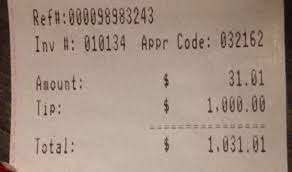
Yes, you earned 4,124 Membership Rewards, but would you really have tipped $1,000 if you didn’t? Don’t answer.

EDITORS NOTE: In 2024, I’m going to try and have a guest post on Saturdays. Today’s guest post is from the strong analytical mind of MattD (maybe the D stands for doppelgänger? Probably not).

Alaska plans to introduce their new award chart in March. Since joining OneWorld this was expected to happen as Alaska tries to become a global airline without any routes leaving the Americas. 

Still, I have been keen on earning Alaska miles when an opportunity or safe way presents itself. I looked back on previous Alaska award bookings and all but one were flights to Asia. I will show below why I’m still earning Alaska miles and for this example, I chose Bangkok, Thailand as my comparison point. 

Below in Table 1, we will examine the old price of routes along with the new pricing with percentage increase. At first glance, the numbers look gnarly and all hope should be abandoned.

Table 1: Old Alaska Award Chart vs New with Percent Difference for a Business Class Flight to Bangkok

AirlineOld PriceNew Price
SEA/YVRLAXDFWORDJFK
Cathay50,00085,000 (+70%)85,000 (+70%)85,000 (+70%)85,000 (+70%)
Hainan50,00085,000 (+70%)
JAL60,00085,000 (42%)85,000 (42%)85,000 (42%)85,000 (42%)85,000 (42%)
Emirates105,000130,000 (24%)130,000 (24%)130,000 (24%)130,000 (24%)85,000 (-19%)
Singapore100,00085,000 (-15%)85,000 (-15%)13,0000 (30%)13,0000 (30%)13,0000 (30%)

Alaska’s old award chart can still be viewed here:

https://web.archive.org/web/20210216105643/https://www.alaskaair.com/content/mileage-plan/use-miles/award-charts

40,000 was used as the old standard credit card sign-up bonus and 65,000 was used as the new standard credit card sign-up bonus, which is a 62.5% increase in miles earned.

Obviously, the Cathay sweet spot is dead and will rest in its forever home with 100,000 Emirates First Class. 

Alaska awards are only getting more expensive if the miles are earned from flying/organic credit card spend. But, the inflation in Alaska credit card bonuses since 2020 means most of these routes increased less than 10%. In fact many have become cheaper if you’ve earned your miles from well-timed sign up bonuses. Table 2 shows the old and new award chart looking at how many sign up bonuses it would take to buy a business class ticket to Bangkok. 

Table 2: Alaska Sign Up Bonuses Needed for a Business Class Ticket

AirlineOld PriceNew Price
SEA/YVRLAXDFWORDJFK
Cathay1.251.311.311.311.31
Hainan1.251.31
JAL1.501.311.311.311.311.31
Emirates2.632.002.002.002.001.31
Singapore2.501.311.312.002.002.00

Color coded to show which award increased vs decreased measured in sign up bonuses

While the new award chart has closed some sweet spots, new ones have opened up, like flying a beach towel in business class can now be had for 50,000 miles or 80% of a sign up bonus. 

This won’t last forever as Alaska will keep devaluing enhancing their program faster than the credit card bonus increases. In the meantime though I will keep earning and burning Alaska miles.

– MattD

80% of a sign-up bonus visualized.

EDITORS NOTE: In 2024, I’m going to try and have a guest post on Saturdays. Today’s guest post is from Johnathan, who has gone from zero to heavy hitter over the course of a year. He’s humble and soft spoken, but carries a large manufactured spending stick.

My journey into the world of rewards began last March, kicking off what I’d call my ‘hobby/work’. The challenge? Juggling several American Express Platinum cards, each with its own lofty spending threshold to hit for maxing out rewards. It was my mentor’s encouragement that nudged me to take the plunge. At first glance, the spending requirements seemed crazy, almost impossible. But having a mentor by my side was a game-changer in navigating this financial labyrinth.

As a newbie, churning felt like being pushed off a plane in the middle of a Chinese metropolis without any friends, trying to learn how to live. It quickly turned into the most unusual hobby I’ve ever taken on, packed with moments that had me thinking, “This can’t possibly work,” defying all logic.

A year in, I’ve learned that success in churning isn’t just about the number of transactions; it’s the people you meet along the way that make the difference. It’s the conversations, the stories shared, and the personal connections that really matter. And, boy, does it save time! When I was just starting, the thought of buying money orders made me anxious, and I’d be driving all over town. But by bringing a personal touch to each interaction and really getting to know the people I met, I could easily handle 15-20 money orders while engaging in genuine conversations. That changed everything, saving me an invaluable amount of time.

I owe so much to my mentor for their guidance and support. Going it alone on this journey is something I can’t even imagine. Having someone in your corner to discuss all the churning escapades is a godsend. They’re the ones you can call up to vent about every hiccup—the roadblocks, claw backs, sketchy gift cards, dealing with Incomm’s customer service—you name it. And if you’re pushing the limits, you can bet things will go sideways. Like Matt says, “If you haven’t been shut down, you’re not pushing hard enough.” I had my first shutdown this year with the GM card. How on earth does a company that produces Buicks cut you off?

What’s more, having a churning confidant is priceless. Trying to explain this world to anyone else is like an alcoholic attempting to explain to a casual drinker the reasons behind their long-term
drinking. You’re met with confusion and questions like, “I don’t get it, why don’t you just stop?” or “Why put yourself through all this effort?” But it’s the collective experiences and all the comical
mishaps that have happened along the way that make it so enjoyable.

– Jonathan