– 1099-K reporting limits increased to $20,000 for 2025 and beyond – 1099-MISC reporting limits increased to $2,000 for 2026 and beyond
Manufactured spenders sending money to themselves should be particularly excited about the former. Bank bonus chasers may be happy about the latter, but you’re still required to report bank bonus income even in the absence of a 1099-MISC. As always, I’m not a tax professional and I’m definitely not your tax professional. Don’t take my advice about anything, ever. (Thanks to DoC)
– Book non-basic economy, cancel to your wallet after 24 hours – Book non-basic economy, cancel to an emailed wallet code after 24 hours, which is separately useful
EDITOR’S NOTE: Today’s post is the second in a series of three Friday guest posts. Today’s post was written by fuzzy, a former Pepper aficionado.
So much of this game involves jumping on opportunities which, due to accident, miscalculation or unwarranted benevolence, are far more advantageous than the normal everyday spoils. Think: mistake fares, unlimited 4% cashback cards, and warehouse store cashiers taking happy pills. A few months ago, a wormhole in the universe opened up called PerfectGift, and for a brief moment enterprising churners were able to print money, in the form of Visa gift cards at 20% off. The Telegram channels blew up when the anomaly was discovered. I personally found out an hour or two after it became public, at which point, my inner voice of failure (like everyone has right? Ok just me then?) told me I’d missed my chance, and I moved on. Only to find out later, they were passing out Paddy’s Dollars for several hours, which could easily have paid for my poor Aunt Sally’s last dying wish. (“Fuzzy”, she whispered, “promise me before I’m gone you’ll put me up in the Park Hyatt Shanghai and upgrade me to a junior suite.”)
Which brings to mind (as everything does) Pepper – the app that achieved a fair bit of notoriety last year selling a changing panel of major gift card brands like Amazon and Target at 10% off. Those discounts took the form of “coins” redeemable for more gift cards. The jeopardy to purchasers was that most of those coins weren’t awarded until 2-3 weeks later. Business folk in the gift card reselling community were comfortable with that minimal risk, however, because they were churning a decent amounts of credit card points.
The engine feeding this obviously unsustainable business model was venture capital. Savvy VC investors were keenly attracted to Pepper’s 100% share of the selling-gift-cards-at-a-steep-loss market. And then earlier this year Pepper – facing intense competition from literally no one – kicked it into high gear, and began offering 20%, then 25%, then 30% off. Meanwhile, individual purchase limits exploded from $5000, to $9000, to $17,000 per day.
If this had happened in any other context over the course of ONE SINGLE AFTERNOON, Telegram would’ve flat out melted, and the smarties who scored a couple hundred of Sam’s Club at -30% would be laughing like hyenas at the rest of us, and my inner voice of failure would be laughing right there with them. And yet – the height of Pepper madness continued. For. Two. Months.
Pepper enthusiasts with the foresight and bravado to completely drop the throttle exactly when things went bonkers – amateurs even, who took quite nicely to six figure statements, Amex financial reviews, and suddenly having to manage a business with 99 employees – were minting literally millions of credit card points, becoming top tier airline elites, and gaining enough free hotel nights to park themselves for the season in a junior suite at the Park Hyatt Shanghai. I, on the other hand (sorry Aunt Sally!), followed my inner voice, LOUDLY stomped out of the Pepper Telegram chat, and spent the next several weeks drowning my sorrows in 24 ounce cans of grape strawberry FOMO.The Pepper frenzy has ended. The last stalwarts were left holding the bag (or they may yet recover their stranded coins lol). However – except for perhaps a few unfortunates who got on at the very end – everyone who still has money coming to them has already recovered the value of that money several times over.
What is the takeaway here? First, the conventional wisdom remains intact: If something appears too good to be true, it probably is. The emphasis however is on “probably”, because as we know, a thing can be too good to be true, and also exist. The mass and timespan of the ostensibly too-good-to-be-true play will be dictated by various factors, such as the number of people who are onto the deal, or who have access to it, and especially, the motivation (if any) of the person (or algorithm) who made that too-good thing available in the first place. When the too-good thing owes its existence to venture capital, don’t trouble yourself with the fact that it’s a too-good thing, just thank your VC benefactors and book your junior suites.
– fuzzy
Pepper’s VC’s other investment: No competition door installation.
– Visiting Istanbul / Turkey doesn’t count – You must connect through Istanbul airport – Only revenue tickets count
I’ve seen itineraries priced between approximately $4,000-$5,000 to complete this challenge from zero; With flexibility I think you could get the total cost below $3,000. If you’re bored, one million bonus miles combined with (probably) earning Star Alliance Gold status through 2027 and the miles you’ll earn for flying make this a decent deal. (Thanks to mforch)
– 150,000 points after visiting 15 cities – 200,000 additional points after 20 cities – 25 years of Mosaic 1 status after 25 cities
You can do this with flexibility for under $2,000, or you can jam it all into a week for more. But: (1) I’ll bet your Mosaic 1 status that JetBlue won’t be around in 25 years, and probably also not in 25 months, and (2) a few credit card bonuses and hitting spend are a better use of your time – but what do I know? Maybe you really like blue corn chips and 6″ standard definition TVs.
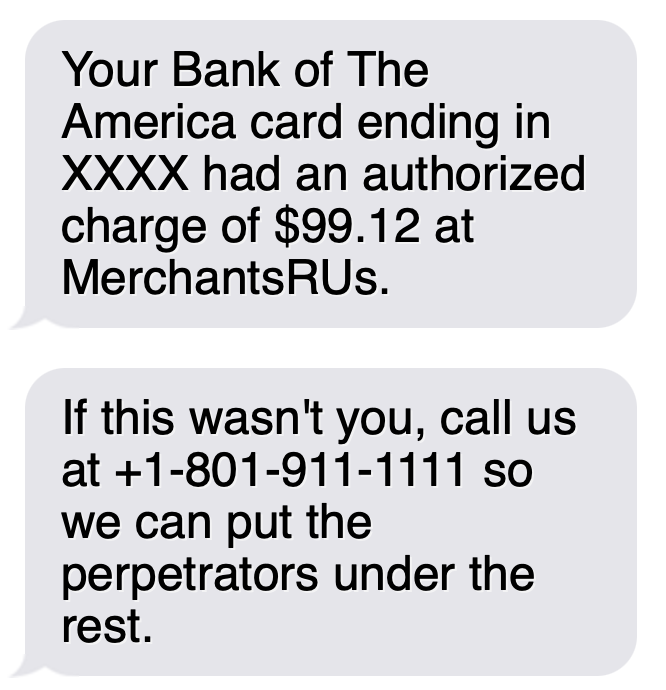
If you’re targeted, it’s probably worth spending some time with charges on your cards to get the fraud alerts under control before August 1, and it’s also worth figuring out how to pay Bank of America in a post alternative payments world. (Thanks to Rocky)
– $5 free giftcards.com gift card with $50 purchase using promo code BOGO50 – $10 free giftcards.com gift card with $100 purchase using promo code BOGO100
These codes come and go, so if there’s no inventory now check later and you may find it. Portals specifically exclude these codes from earning, but that doesn’t mean that it won’t work.
– Reserve referral links are now available – Preferred has a heightened bonus of 75,000 points after $5,000 spend in three months – Pre-October 26 earned points have boosted travel redemptions, post-October 26 earned points don’t (referring to 1.5/1.25 cents per point on the Chase Travel Portal) – Points are redeemed in FIFO order (first in, first out) – Pay Yourself Back remains
I’m going to do my best to not talk about the Sapphire for the rest of the week, there’s absolutely no need feed the marketing machine.
Happy Wednesday!
Yes it’s about birds, but it might as well be about Sapphire marketing.
I’m sure the rebooted Sapphire Reserve launch will be the noisiest in churning history, and I’m sure you can find a few dozen articles in literally less than a minute about why 200,000 points is the new black. The bonuses seem to be:
– Personal: 100,000 Ultimate Rewards + $500 Chase Travel after $5,000 spend in three months – Business: 200,000 Ultimate Rewards after $30,000 spend in six months
Let’s emphasize four points to help you wade through the impending onslaught of never-ending Sapphire Reserve crap:
– Offers are probably available via referral from another player, no need to use a blog link – 100,000 Ultimate Rewards is nice, but 250,000 Membership Rewards is probably nicer – $30,000 spend for 200,000 in Ultimate Rewards isn’t actually a great return – Newly launched business cards often bypass 5/24
Don’t let forced pseudo-urgency drive your decisions, be deliberate.
There’s a slightly interesting play for converting Ultimate Rewards into difficult to earn airline programs like Lufthansa Miles&More (EDIT: Gary reminded me that Lufthansa Miles&More is no longer part of the program), which has a transfer ratio from Ultimate Rewards through Bonvoy of 1:0.687 in 25,000 mile increments.
– If you’re going to do a transfer, just knock it out now so you don’t have to think about it later – Every time you see one of these articles, take a shot of your favorite beverage
The churner who finds the most articles and comments about the “partnership ending” and “last chance” gets a prize!
Happy Tuesday!
A churner passes out after reading RSS feeds for 17 minutes while playing the new drinking game.
One of my 17 favorite slogans is “always be probing.” Sometimes, that probing involves throwing every gift card type you can think of at a FinTech to see what sticks. But, it’s also easy to get stuck in a rut because you don’t want to buy another American Express gift card as a test since they’re hard to liquidate. So you end up never buying one nor testing it, and then you potentially miss out on a goldmine.
To counter this effect, I’d suggest that you find a way to liquidate every type of gift card out there even if it comes at a relatively high cost, because obscure gift cards might be integral to your next six figure play but you have to buy one to test first. A few ideas for last resort: