While Pepper has killed the market for third party gift cards bought at a 10% discount in some brands, others like BestBuy and Lululemon are largely unaffected given the purchase limits on the former with Pepper and the lack of those cards altogether on the latter.
The Chase Sapphire Reserve, United Club card, and Ritz cards no longer offer primary rental car insurance to New York residents, where it now reverts to secondary insurance. They also exclude Israel, Jamaica, the Republic of Ireland, and Northern Island in the benefits guide.
The US Bank Altitude Reserve doesn’t have this restriction and therefore wins New York, but does also restrict coverage in Israel, Jamaica, the Republic of Ireland, and Northern Ireland. The Venture X is similar, but doesn’t win New York because it’s Capital One.
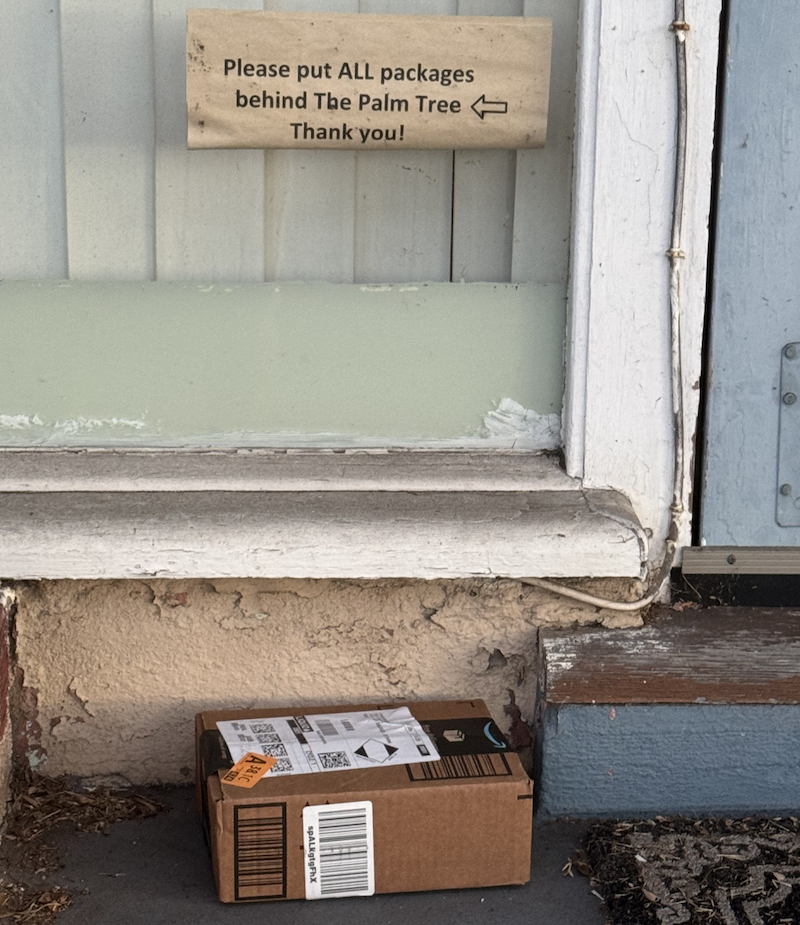
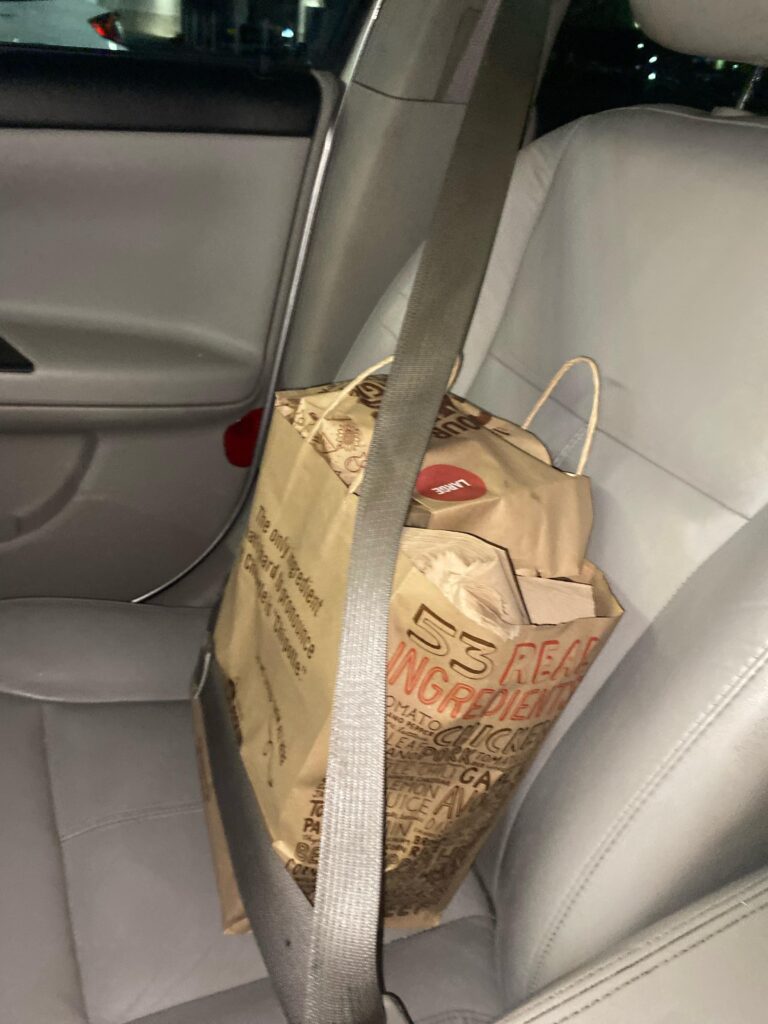
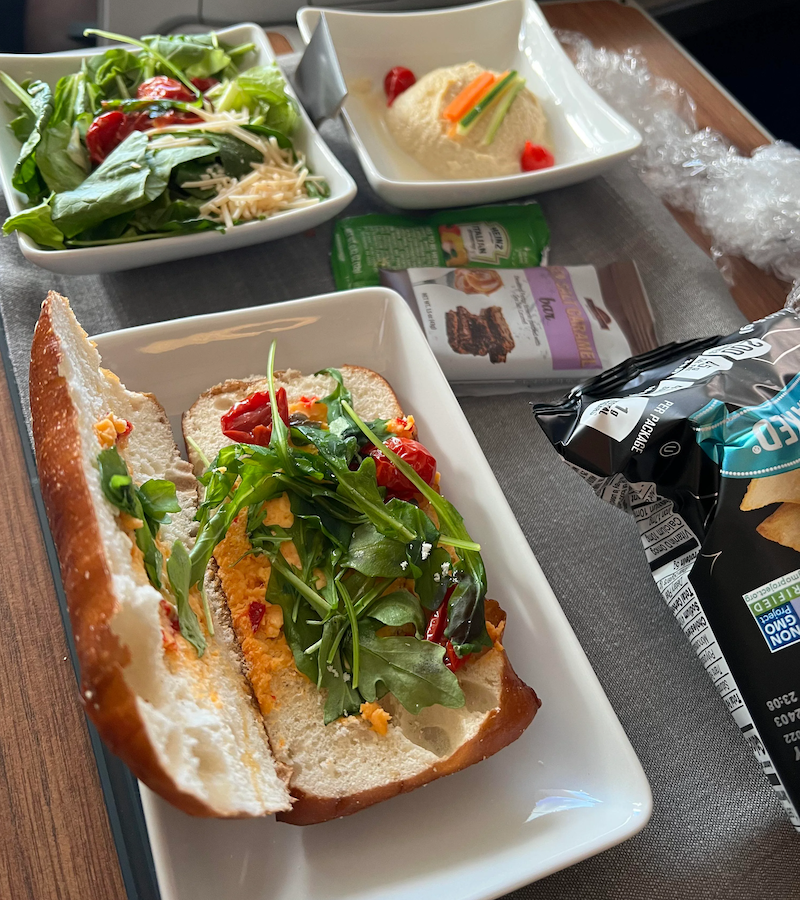
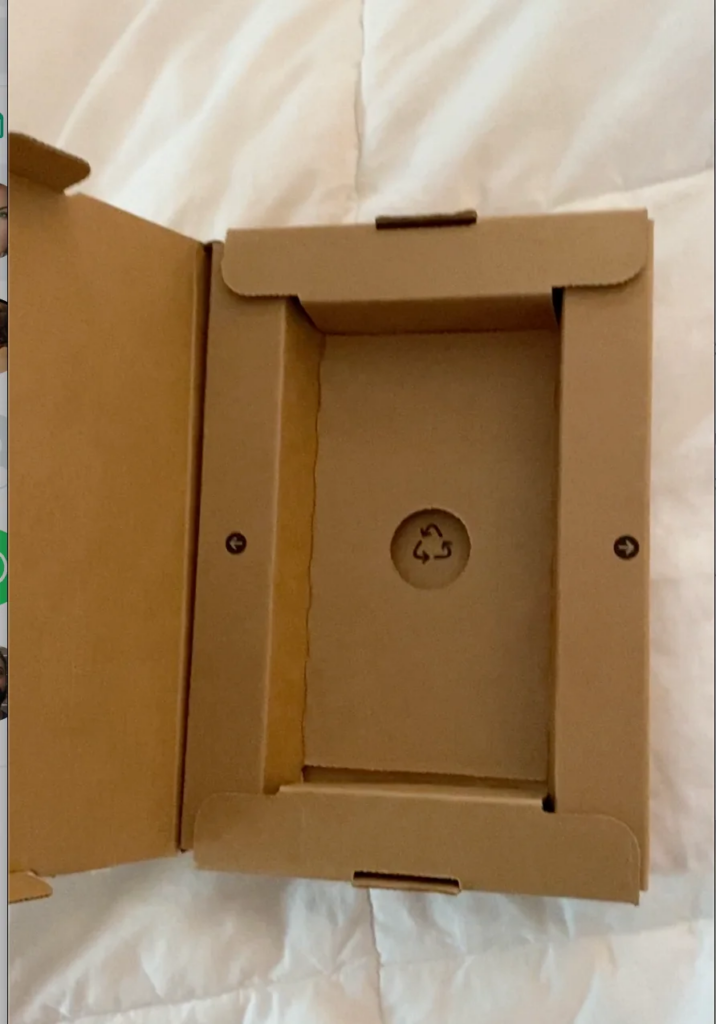
The other semi-official way to win New York: Snap a picture of at least four different varieties of the same, slightly off, character.
Staples has fee free $200 Visa gift cards starting Sunday and running for two weeks, limit nine per transaction. The two week promotional window is odd, normally when promotions are extended it’s because either (1) people pick up other profitable things when in store for the promotion, or (2) there’s not enough volume to exhaust the promotional budget in one week, so they extend. Neither feels like the right explanation though.
Bilt Rewards has two new transfer partners, which solves the, err, mystery of why some travel bloggers were at a Bilt offsite earlier this week. I wonder who paid for the offsite? Anyhoodles:
– Accor Hotels at a 3:2 ratio – TAP Air Portugal at a 1:1 ratio
Accor Hotels partners with Citi and Capital One but with a worse 2:1 transfer ratio. Accor Hotel points are worth about 2.2 cents per point with fixed redemption values and are often a great deal in the European equivalents of Lubbock, TX. TAP Air Portugal is a Capital One transfer partner with the same ratio as Bilt.
Giant, Giant Food Stores, Martin’s, Stop & Shop have 2x points on Visa gift cards through Thursday, limit $1,500 or $2,000 per account depending on store. (Thanks to his eminence, Stephen at GCG)
Marriott has a similar deal with AirCanada Aeroplan with a smaller bonus that works out to 28,000 miles, which frankly is worth about the same as 36,000 MileagePlus miles. Frankly I’m impressed at some marketing person’s mileage valuation prowess.
The Pepper gift card platform, seemingly created as a conduit for moving money between venture capital bank accounts and gamers’ wallets, warrants discussion based on recent developments and crowd think.
Background
Moochoo, the company, the company behind Pepper, raised $23.05 million on December 21, 2023. Is it auspicious that they closed on a pagan holiday? Probably not, but it’s funny. Pepper’s go-to-market strategy started shortly thereafter with effectively unlimited 10% back (in Pepper coin currency) on new accounts for the first 15 days of the account’s existence, along with bonuses for the referrer. They appeared to want new users at all costs and turned a blind eye to gaming with zero due diligence on new accounts. (Have a new device? That’s a new person, obviously. It’s not possible to have more than one, duh. Just make those charts go up and to the right!)
Seven months later in July, Pepper pivoted its rewards scheme away from unlimited new account cash-back, almost certainly because at its then current burn rate, it wouldn’t survive long in the face of unlimited purchases of Walmart, Home Depot, Amazon, and other high value gift cards at ~90% of face value. Pepper replaced the new-user sign-up bonus with double base points on gift cards for the first 15 days, which wasn’t useful for bulk resale and caused volume to plummet. How do I know volume plummeted? Pepper order IDs are sequential, naturally.
The Now
Pepper took a few weeks, but they’ve settled into the new normal. Now, they release “Daily Boost” merchants once, twice, or three times a day. Boosted merchants earn much more than regular, like 12x on Amazon or 20x on Columbia Sportswear. Boosted merchants have a total capacity before the boost goes away, which sometimes happens in 30 minutes for popular brands and sometimes doesn’t happen at all.
The Warning Lights
There are a few recent developments that could be taken as warning lights:
Boosted merchant rewards payouts are now delayed by several weeks (is this related to cash-flow concerns?)
New accounts now require ID scans, but only as of a few weeks ago (why now, maybe because they’re trying to raise money and VCs want real user verification?)
Boosted merchant deals are getting better brands and higher payouts daily (why offer bigger than 10% discounts on high-volume bulk resale gift cards like Amazon, Walmart, and HomeDepot, which were probably burning Pepper’s cash reserves down like a dry Christmas tree on fire? Maybe to build temporary operating revenue?)
The capacity for boosted merchant deals seems to be increasing steadily (again, is this for cashflow reasons?)
Boosted merchant deals seem to be shifting to the brands that sell-out quickly from the brands that don’t (why push for more volume on cards you’re probably taking a loss on?)
To answer these questions, I think it’s time to build a simple quant-model for Pepper’s cash reserves.
The Pepper Doomsday Countdown
Let’s come up with a model for how much cash Pepper probably has left. The formula is really just $23.05 million, minus burned cash, plus earned profits. Let’s make some data-driven assumptions:
Monthly operating expenses, salaries, and benefits for 37 employees, assuming an average overall employee expense of $65,000 per year (this is likely a rather low estimate): 37 * $65,000 / 12 = $200,416 / month
Number of transactions through September 30, 2024 (order ID’s are sequential): 857,000
Average transaction size (bulk brands are usually between $750 and $1,500 in max size): $1,000
Monthly profit from regular discount gift card purchases for non-boosted accounts and users, assuming 3% profit: 3% * $500,000 = $15,000 / month
Per order losses on boosted transactions, assuming 3% loss: $1,000 * 3% = $30
Percentage of transactions that are boosted, in a new user sign-up bonus, or otherwise money losing: 80%
Now, let’s run the America-Loves-Math-o-tron-5000:
So, ~$23 million raised and ~$22 million in expenses by my simplistic toy model. You can play with the numbers and come up with your own conclusion, but you have to get pretty far below a 3% per transaction loss to make things look rosey for Pepper, or really far above $500,000 per month in profitable transactions.
Where does that leave me? I think Pepper is about 10% likely to die in the next 30 days, and maybe 50% likely to die by the end of 2024; unless of course they find another VC that wants to shoot money into a toilet. I’m still playing the Pepper game but only at a small level. If they fold and I lose my floated Pepper rewards, I’ll live without much regret.
Happy weekend I guess?
The result of the last round of Pepper’s VC money cannon.
This one is safe for anyone to use, potentially unlike the one made public last week which was dubious at best and err, scary at worst. Why was that one dubious? It was a manufactured link specifically constructed with two contradicting offers that happened to pass through the application system in an unintended way. Side-note: That fact that this link is dubious still isn’t noted on other blogs, hopefully because they just don’t know. Always know the province of links before diving in. (Thanks to reb702)
I got approximately 25,000 Rapid Rewards points back by grooming by existing bookings, though most of those existing bookings are backup flights so the expectation value for my actual cost is lower than 40%.
There’s a ton of economy space at 15,000 miles in this month’s drop, more than I’ve ever seen in-fact. Discount business class space is almost non-existent this year and barely-existent next year.
Apropos of nothing, do you have an American Express Platinum or Business Platinum card? Hmm, interesting. That probably means you shouldn’t worry about Bilt’s stupid elite status challenge tomorrow, right? Still, I bet you can find a few tens of thousands of words written about the match between Friday and now though. Yay marketing!
Today’s the last day of unlimited 1.1 cents per point cash-out. Starting tomorrow, you’re limited to 1 million per calendar year though points cashed-out today don’t apply to that limit.
– 1,000 bonus miles after $1,000 spend (extra 1x) – 7,500 bonus miles after $5,000 spend (extra 1.5x) – 18,000 bonus miles after $9,000 spend (extra 2x)
Even though United MileagePlus miles suck, the third one is a big enough bonus on top of base spend that I’ll hit it.
– Buy in even multiples of $300 – Both variable and fixed load cards work – Look for lower fee Everywhere cards if you know how to liquidate them – Try for multiple transactions back to back
Transfers between Alaska MilagePlan and Hawaiian HawaiianMiles are now live and must be done in 500,000 or fewer mile increments. Sorry to all of you that are moving 37 million miles, that’s a lot of clicking. Also, is this a good time to remind everyone that Barclays Hawaiian card members can transfer miles to immediate family members? No reason.
Unfortunately Membership Rewards transfers to HawaiianMiles are currently being rejected and refunded, so that’s great. #bonvoyed
– Flights with assigned seating will be sold in late 2025 for flights in 2026 and beyond – Checked bags remain free – Southwest will partner with IcelandAir in 2025 – A-List Preferred elites will get free preferred seating selection at booking – A-List elites will get free preferred seating selection at T-48 hours
They’re also scrambling to avoid massive losses by trimming markets and selling aircraft so I expect these details to change somewhat as they continue to focus on top line revenue and making the bottom line turn black. No word from Southwest on the diagonal line.
Citi has a new card linked offer for 4% back at Giftcards.com with up to $30 cash back two times by November 10. Historically these promotions ironically haven’t worked when buying Visa and Mastercard gift cards, but in 2024 they’ve been working as you’d expect. (Thanks to GCG)
Reader Mike let me know about a deal at Aloft Hotels via Wells Fargo Deals through September 30. When I went looking for it, I found a few other good ones, all expiring the same day:
– 10% back at Renaissance Hotels up to $75 cash back – 10% back at Hilton Garden Inn up to $65 cash back – 10% back at TownPlace Suites up to $57 cash back – 10% back at Aloft Hotels up to $57 cash back
Wells Fargo offers are gamble in the same ways as Chase and BankAmeriDeals.